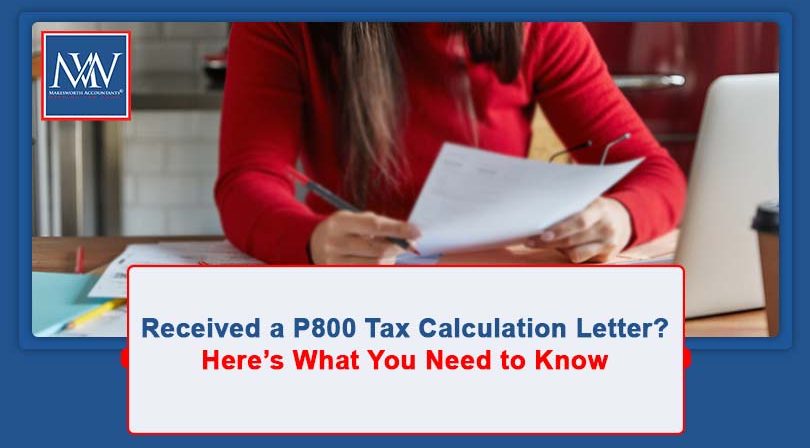
Received a P800 Tax Calculation Letter? Here’s What You Need to Know
Have you received a P800 tax calculation letter from HMRC? It could mean you have paid too much tax and are due a refund, or that you need to pay additional tax.
A P800 is a tax calculation issued by HM Revenue & Customs (HMRC) when its records indicate that an employee or pensioner has paid the wrong amount of Income Tax through the PAYE (Pay As You Earn) system.
The letter explains HMRC’s calculation and what you need to do next. However, it is important to check the figures carefully rather than assuming the calculation is correct.
Why Have You Received a P800 Tax Calculation?
There are several reasons why HMRC might send you a P800 letter. Common examples include:
- Being on the wrong tax code: Your employer or pension provider may have deducted too much or too little tax.
- Changing jobs: If you leave one job and start another within the same tax month, your tax may not be calculated correctly.
- Receiving a pension while working: Having both employment income and pension income can affect how your tax is collected.
- Receiving certain benefits: Taxable benefits, such as Employment and Support Allowance (ESA) or Jobseeker’s Allowance (JSA), may affect your overall tax position.
Depending on your circumstances, HMRC may calculate that you have overpaid tax and are entitled to a refund, or that you have underpaid and need to pay the outstanding amount.
If you complete a Self Assessment tax return for the relevant tax year, your tax position is generally dealt with through that process rather than a separate P800 calculation.
How to Claim a Tax Refund
If your P800 letter confirms that you are due a refund, it should explain how you can receive the money.
Depending on the instructions in your letter, you may be able to claim your refund through:
- GOV.UK: Follow the instructions at Claim a tax refund.
- Your Personal Tax Account: Sign in to your HMRC account and follow the available refund instructions.
- The HMRC app: Check whether the refund can be claimed through the app.
- A cheque from HMRC: If your letter says a cheque will be sent automatically, you may not need to take any further action.
HMRC advises that eligible online refund claims should normally be paid within five working days. Where a cheque is being issued automatically, it will usually arrive within 14 days of the date on the P800 letter.
Always follow the instructions in your own letter, as the process and timing can vary depending on your circumstances.
What Happens If You Owe Tax?
A P800 letter may show that you have paid less tax than you should have. If this happens, HMRC will explain how the outstanding amount will be collected.
In eligible cases, HMRC may adjust your tax code so that the underpaid tax is collected gradually through your wages or pension over 12 months.
This normally applies where:
- You pay tax through PAYE on employment or pension income.
- Your income is high enough above your Personal Allowance to allow the additional tax to be collected.
- The amount owed is less than £3,000.
If the tax cannot be collected through your tax code, HMRC will normally contact you with further instructions about payment.
Read your letter carefully so that you understand how much you owe, how HMRC intends to collect it and whether you need to take any action.
Check Your P800 Tax Calculation Carefully
Receiving a P800 letter does not automatically mean that HMRC’s calculation is correct. It is worth reviewing the figures before claiming a refund or accepting that you owe additional tax.
Check that your employment income, pension income, tax deducted and Personal Allowance have been recorded accurately. If you have more than one source of income, pay particular attention to how your tax-free allowances have been allocated.
Errors can sometimes occur when allowances are divided between different sources of income. The treatment of savings interest and the savings nil rate band can also affect the final calculation.
If something does not look right, contact HMRC and explain which figures you believe are incorrect. HMRC will review your query and, if it agrees that an error has been made, issue a revised calculation. If it disagrees, it should explain the reasons for its decision.
Keep your P800 letter and any supporting documents, such as payslips, P60s and pension statements, so you can compare the information against HMRC’s figures.
Need Help Understanding Your P800 Letter?
A P800 tax calculation can be confusing, particularly if you have changed jobs, started receiving a pension or have several sources of income.
Taking the time to check your tax calculation can help you identify potential errors and understand whether you need to claim a refund or pay additional tax.
For further guidance, visit GOV.UK’s information on tax overpayments and underpayments.
If you are unsure about your tax position, consider speaking to a qualified tax adviser who can help you understand the calculation and your available options.
For more information, Book a Free Consultation
Need Accountancy Support?
For information on bespoke training, or if you have any other questions for Makesworth Accountant, please fill in your details below
Accountancy Support
Proud to be featured in









 150
150