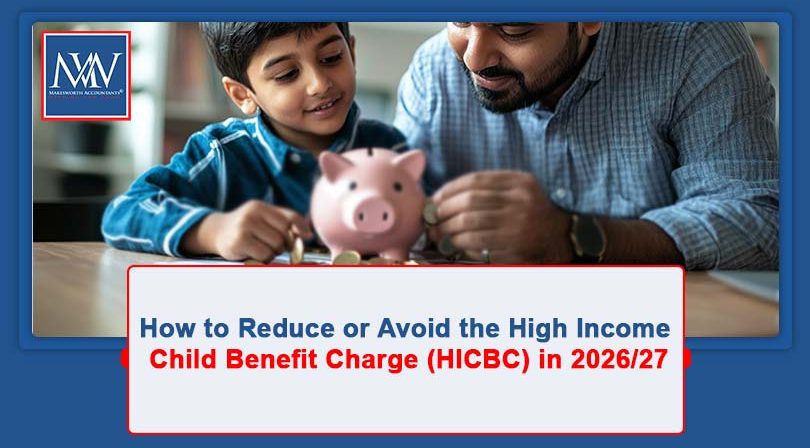
How to Reduce or Avoid the High Income Child Benefit Charge (HICBC) in 2026/27
For many families, Child Benefit provides valuable financial support towards the cost of raising children. However, if either parent earns above a certain income threshold, part or all of that benefit may need to be repaid through the High Income Child Benefit Charge (HICBC).
Understanding how the charge works and the options available to reduce or avoid it can help families retain more of their Child Benefit while planning their finances efficiently.
What Is the High Income Child Benefit Charge (HICBC)?
The High Income Child Benefit Charge is a tax charge that applies when an individual or their partner has an adjusted net income of £60,000 or more during the tax year and Child Benefit is being claimed.
The charge gradually reduces the value of Child Benefit received. For every £200 of income above £60,000, 1% of the Child Benefit received must be repaid through the tax system.
Once adjusted net income reaches £80,000, the entire Child Benefit amount is effectively clawed back.
Child Benefit Rates for 2026/27
For the 2026/27 tax year, Child Benefit is paid at:
- £27.05 per week for the first child
- £17.90 per week for each additional child
While these payments can provide meaningful support, higher earners may find some or all of the benefit subject to the HICBC.
Why You Should Still Register for Child Benefit
Some families choose not to receive Child Benefit if they know it will eventually be repaid through the HICBC.
However, it is often advisable to register for Child Benefit even if payments are not received. Registration can help secure valuable National Insurance credits, which contribute towards qualifying years for the State Pension.
This is particularly important for parents who are not working or have low earnings.
Who Pays the HICBC?
The charge is applied to the person with the highest adjusted net income, regardless of which parent actually receives the Child Benefit.
This means you could be responsible for paying the charge even if the Child Benefit is paid directly to your partner.
Example: How the HICBC Works
Jade and Liam have two children and receive Child Benefit of £44.95 per week, equivalent to £2,337.40 per year.
Jade stays at home and claims the Child Benefit, while Liam has an adjusted net income of £70,000.
Since Liam’s income exceeds the £60,000 threshold by £10,000, 50% of the Child Benefit must be repaid through the HICBC.
As a result, Liam faces a charge of £1,168.70 for the tax year.
Understanding Adjusted Net Income
Adjusted net income is the figure used to determine whether the HICBC applies.
It is calculated by taking your taxable income before personal allowances and deducting:
- Pension contributions
- Gift Aid donations
- Certain trading losses
Managing your adjusted net income can be an effective way to reduce or eliminate the HICBC.
Three Ways to Reduce or Avoid the HICBC
1. Consider Equalising Household Income
One of the unusual aspects of the HICBC is that it is based on individual income rather than total household income.
For example:
- Two parents earning £60,000 each can keep all their Child Benefit.
- A household with one parent earning £80,000 and the other not working may lose all their Child Benefit.
Where practical, families may wish to explore flexible working arrangements, reduced hours, or income-sharing strategies that help keep individual income below the threshold.
2. Increase Pension Contributions
Pension contributions reduce adjusted net income and can significantly lower the HICBC.
Example
Lucy and Olly have four children and receive £4,199 in Child Benefit during 2026/27.
Lucy earns £50,000, while Olly’s adjusted net income is £75,000.
Without planning, they would lose £3,149.25 through the HICBC.
By making a £15,000 pension contribution, Olly reduces his adjusted net income to £60,000. As a result, the HICBC no longer applies, allowing the family to retain their full Child Benefit while boosting retirement savings.
3. Make Gift Aid Donations
Charitable donations made through Gift Aid are also deducted when calculating adjusted net income.
If you already support charitable causes, Gift Aid donations can provide a dual benefit:
- Supporting charities and community initiatives.
- Potentially reducing or eliminating your HICBC liability.
Careful planning around charitable giving can therefore offer both social and financial advantages.
Final Thoughts
The High Income Child Benefit Charge can significantly reduce the value of Child Benefit for higher-earning families. However, with effective financial planning, many households can reduce or even eliminate the charge.
Strategies such as pension contributions, Gift Aid donations, and reviewing household income arrangements may help you keep more of your Child Benefit while supporting your long-term financial goals.
If you are unsure how the HICBC affects your family, seeking professional tax advice can help you identify the most tax-efficient approach based on your circumstances.
For more information, Book a Free Consultation
Need Accountancy Support?
For information on bespoke training, or if you have any other questions for Makesworth Accountant, please fill in your details below
Accountancy Support
Proud to be featured in





 150
150