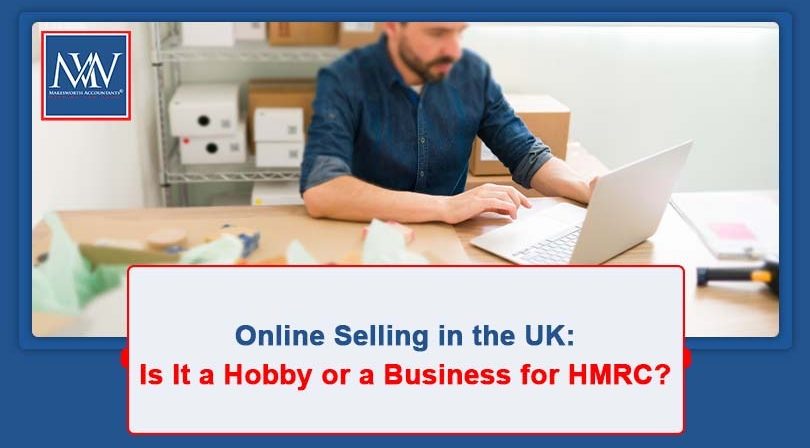
Online Selling in the UK: Is It a Hobby or a Business for HMRC?
Selling online through platforms like eBay, Vinted, Etsy, Depop, Amazon Marketplace, or Facebook Marketplace has become extremely common in the UK. Some people sell casually to clear out unwanted items, while others buy and sell regularly to earn extra income.
But here’s the important part:
HMRC may treat you as a trader, even if you think you’re just doing it as a hobby.
So how do you know whether your online selling counts as a business or simply a hobby?
Let’s break it down clearly.
When Online Marketplaces Consider You a Trader
Many UK online marketplaces, including eBay, classify sellers as traders if they:
-
List items frequently
-
Sell in bulk
-
Buy items specifically to resell
-
Appear to be selling with the intention of making profit
When a seller is treated as a trader, the platform may apply:
-
Additional selling fees
-
Different rules and protections compared to private sellers
Important: Platforms Must Report Some Sellers to HMRC
Under UK reporting rules, online platforms are required to share certain seller data with HMRC when the activity reaches a specific level.
For example, if you complete:
-
30 or more sales transactions, OR
-
Total sales exceed around £1,707 (after fees)
…then platforms such as eBay may report your sales activity to HMRC as trading.
Once reported, HMRC expects you to declare this income through a Self Assessment tax return (if applicable).
Platforms usually notify sellers when their information has been shared.
Does the £1,707 Threshold Mean You Don’t Pay Tax Below It?
No — and this is where many people get confused.
The £1,707 reporting threshold is not the same as the tax-free limit.
HMRC uses a separate rule called the Trading Allowance.
HMRC Trading Allowance: The Real Tax-Free Limit
The UK trading allowance allows you to earn up to £1,000 per tax year in gross income from:
-
Online selling
-
Casual services
-
Side gigs such as babysitting, gardening, dog walking, etc.
If your gross trading income is under £1,000, you usually:
✅ Don’t pay tax
✅ Don’t need to declare it
But if you earn more than £1,000, you may need to:
-
Register for Self Assessment
-
Declare your income
-
Pay tax depending on your profit
How HMRC Decides: Business vs Hobby
Many people assume a hobby becomes a business only when earnings reach a certain amount.
But HMRC does not decide based purely on money.
Instead, HMRC looks at the overall nature of your activity.
The challenge is that many online sellers fall somewhere in the middle — not fully casual, but not a full-time business either.
The “Badges of Trade” HMRC Uses
To decide whether you’re trading, HMRC often uses a set of indicators called the Badges of Trade.
These are not strict rules, but they help HMRC judge the intent and behaviour behind your selling activity.
HMRC lists the badges as:
-
Profit-seeking motive
-
Number of transactions
-
Nature of the asset
-
Similar trading activity or interests
-
Changes made to the asset
-
How the sale was carried out
-
Source of finance
-
Time between purchase and sale
-
Method of acquisition
Key Signs That HMRC May Treat You as a Business
1. You Are Selling to Make a Profit
This is the strongest indicator.
HMRC is more likely to treat you as a trader if you:
-
Buy items specifically to resell
-
Adjust pricing to maximise profit
-
Promote your products
-
Grow your sales over time
-
Operate like a small business
If you consistently make losses with no realistic plan to become profitable, HMRC may view the activity as more of a hobby.
2. You Sell Frequently and Regularly
A one-off sale is usually not trading.
But if you sell regularly — even part-time — HMRC may view it as a trade.
Even isolated transactions can count as trading in some cases, especially if the deal looks commercial or speculative.
A well-known tax case often quoted is Rutledge v CIR (1929), where a person bought and sold one million rolls of toilet paper in one transaction — and it was treated as trading.
3. The Type of Items You Sell Matters
Some items naturally look like trading stock, such as:
-
Bulk electronics
-
Mobile phones
-
New products purchased for resale
-
Materials bought to create products
Meanwhile, selling personal items like:
-
Used furniture
-
Old electronics
-
Personal vehicles
-
Household goods
…is more likely to be considered casual selling (especially if the items were originally bought for personal use).
4. How Long You Owned the Item
HMRC also considers the time between purchase and sale.
-
A short ownership period can suggest trading
-
Keeping an item for a long time before selling supports the argument it was personal use or investment
Practical Advice: Keep Clear Records
Whether you’re selling casually or operating as a business, keeping good records is essential.
You should keep evidence of:
-
Purchase invoices or receipts
-
Dates of purchase and sale
-
Whether items were used personally
-
Costs such as postage, platform fees, packaging, etc.
Good records can help you justify your position if HMRC ever asks questions.
Final Thoughts
Online selling can start as a hobby — but it can quickly move into business territory without you realising it.
If you’re selling frequently, buying stock to resell, or earning more than £1,000 per year, it’s worth checking whether you should be declaring your income.
If you’re unsure, professional advice can help you avoid unexpected tax bills and HMRC penalties.
Partner note:
BIM20200 – Meaning of trade: badges of trade
https://www.gov.uk/government/news/information-for-online-sellers
For more information, Book a Free Consultation
Need Accountancy Support?
For information on bespoke training, or if you have any other questions for Makesworth Accountant, please fill in your details below
Accountancy Support
Proud to be featured in





 151
151