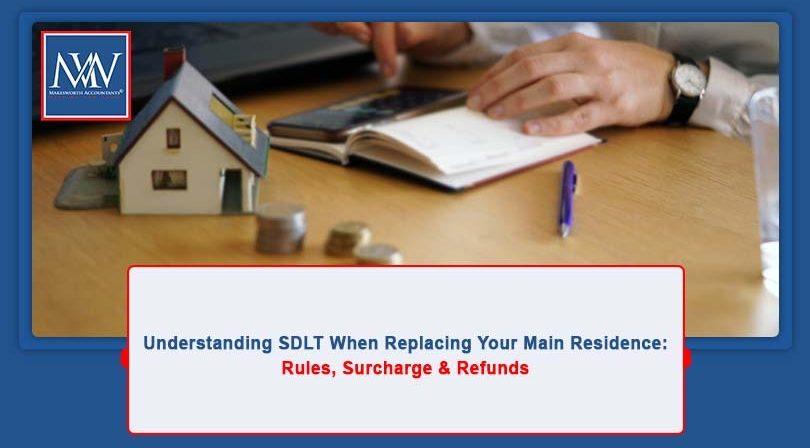
Understanding SDLT When Replacing Your Main Residence: Rules, Surcharge & Refunds
When purchasing residential property in the UK, Stamp Duty Land Tax (SDLT) normally applies based on the purchase price. However, additional rules apply if the buyer already owns more than one property. In these cases, an extra SDLT charge may apply.
This guide explains how the additional SDLT surcharge works when replacing your main residence and when a refund may be available.
What Is the SDLT Additional Property Surcharge?
If you buy an additional residential property while already owning one or more properties, you may need to pay an extra 5% SDLT surcharge.
This surcharge applies when:
-
You already own another residential property.
-
The property you are buying costs £40,000 or more.
The surcharge is added on top of the standard residential SDLT rates.
When the SDLT Surcharge Does Not Apply
There is an important exception when you are replacing your main residence.
The additional SDLT surcharge will not apply if both of the following conditions are satisfied:
-
The new property is intended to replace your main home.
-
Your previous main residence is sold within 36 months of completing the purchase of the new property.
If these conditions are met, the purchase will be taxed only at the standard residential SDLT rates.
What Happens If Your Old Home Has Not Yet Sold?
Sometimes, the purchase of a new home completes before the previous home is sold. In this situation:
-
The SDLT surcharge must initially be paid when buying the new property.
-
If the previous main residence is sold within 36 months, you can apply for a refund of the surcharge.
This rule ensures buyers can move homes without permanently paying the higher SDLT rates.
Example 1: Selling and Buying on the Same Day
Matt and Lucy own two rental properties alongside their main home.
They sell their current main residence and purchase a new property to live in. Both transactions complete on the same day.
Because they are replacing their main residence, they only pay standard residential SDLT rates on the new property. The 5% surcharge does not apply.
Example 2: Buying Before the Old Home Is Sold
Alicia owns a holiday cottage as well as her main home. She decides to move closer to her family and buys a new property for £500,000, completing the purchase on 1 March.
However, her previous home sale is delayed and only completes on 16 April.
Because Alicia still owned two properties at the time she bought the new one:
-
She had to pay standard SDLT plus the 5% surcharge.
-
Her total SDLT bill was £40,000, including a £25,000 surcharge.
Once the sale of her previous main residence completed, she became eligible to claim back the £25,000 surcharge.
How to Claim an SDLT Refund
If you paid the SDLT surcharge because your previous home had not yet sold, you can claim a refund once the sale is completed.
Important points to remember:
-
Your previous main residence must be sold within three years (36 months) of buying the new home.
-
In exceptional situations, refunds may still be possible even if the sale took longer.
The refund is not issued automatically, so you must submit a claim.
Deadline for Claiming the Refund
You must submit the refund claim to HMRC within the later of:
-
12 months after selling your previous main residence, or
-
12 months after the filing date of the SDLT return for the new property.
Remember that an SDLT return must normally be filed within 14 days of completing the property purchase.
For more information, Book a Free Consultation
Need Accountancy Support?
For information on bespoke training, or if you have any other questions for Makesworth Accountant, please fill in your details below
Accountancy Support
Proud to be featured in










 151
151