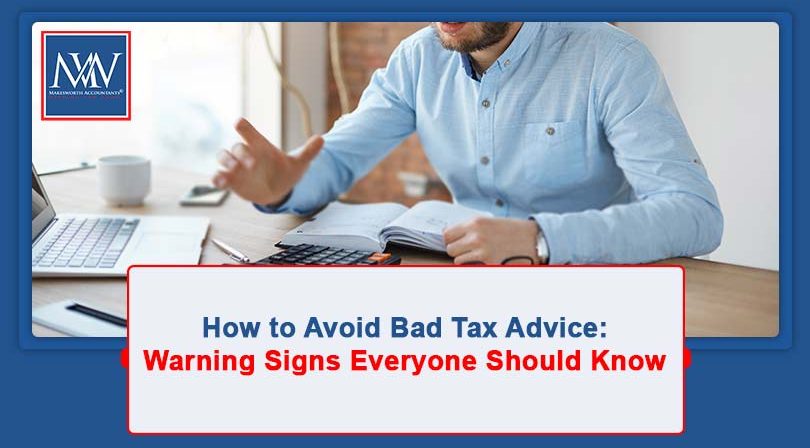
How to Avoid Bad Tax Advice: Warning Signs Everyone Should Know
Tax advice is easier to find than ever. A quick search online can bring up videos, social media posts and articles promising simple ways to reduce your tax bill or claim money back.
But not all tax advice is reliable.
HMRC has warned that some financial influencers, often referred to as “finfluencers”, promote tax tips as quick and easy ways to save money without explaining the rules, conditions or potential risks involved.
Following advice without checking whether it applies to your circumstances could leave you with an unexpected tax bill, interest charges or penalties.
The good news is that there are some clear warning signs to look out for.
Be Careful with “Quick Win” Tax Advice
Tax rules can be complicated, and there is rarely a one-size-fits-all solution.
Be cautious when you see social media posts or online content promising guaranteed tax savings, large refunds or ways to avoid paying tax altogether. Advice that sounds too simple may leave out important conditions or restrictions.
Before taking action, check whether the advice comes from a reliable source and whether the rules actually apply to your circumstances.
If you are unsure, getting advice from a qualified tax professional can help you make an informed decision.
Understand the Difference Between Tax Planning and Tax Avoidance
Legitimate tax planning involves using tax reliefs, allowances and rules that Parliament has provided. Tax avoidance is different.
Tax avoidance schemes can involve artificial arrangements designed mainly to create an unexpected or artificial tax advantage rather than having a genuine commercial purpose.
If HMRC determines that you have used a tax avoidance scheme, you may have to pay the tax that should have been paid, along with interest and potentially penalties.
This is why it is important to understand exactly how a tax arrangement works before agreeing to it.
Check How You Are Being Paid
One useful way to spot a potential tax avoidance arrangement is to look carefully at your contract, payslips and bank payments.
Make sure the amount you receive and the tax and National Insurance deductions shown on your payslip make sense.
Be particularly cautious if:
- You receive more money in your bank account than the amount shown on your payslip.
- Part of your income appears to be untaxed.
- You are told that some of your pay is a “loan” or “capital payment”.
- Someone promises that you can significantly increase your take-home pay without a corresponding tax charge.
- You are encouraged to join a scheme without being given a clear explanation of how it works.
Remember, even if someone else handles your tax affairs, you remain responsible for making sure the correct amount of tax is paid.
If you think you may already be involved in a tax avoidance scheme, it is sensible to contact HMRC as soon as possible.
Take Extra Care When Using an Umbrella Company
Many contractors and temporary workers are employed through umbrella companies. Recruitment agencies may use these companies to employ and pay workers, while the recruitment agency itself finds the work.
Using an umbrella company is not automatically a problem. However, workers should understand how their pay is calculated and how much tax and National Insurance is being deducted.
Check your payslip carefully and make sure you understand all payments and deductions.
If you notice unexplained additional payments or amounts that appear to have been paid without the appropriate tax deductions, ask questions before accepting the arrangement.
HMRC provides tools and guidance to help workers check whether their tax and National Insurance deductions are correct.
Know How to Report a Tax Avoidance Scheme
If you have been encouraged to join a tax avoidance scheme, know of a scheme being promoted or believe that someone is selling a tax avoidance arrangement, you can report it to HMRC.
Reporting concerns can help HMRC identify schemes and businesses that may be putting taxpayers at risk.
If you are already involved in a scheme, getting professional advice early may also help you understand your position and what steps you may need to take.
Be Careful with Tax Refund Companies
Tax refund companies often advertise their services by offering to make tax relief claims on your behalf.
For some people, this may appear to be an easy way to claim money back. However, a fee or commission may be deducted from the refund.
In many cases, taxpayers can check their eligibility themselves and make a claim directly through HMRC.
Before using a tax refund company, check:
- Whether you are actually entitled to the tax relief.
- How much the company will charge.
- Whether there is a commission or administration fee.
- Whether you can make the claim directly through HMRC.
- What information you are being asked to provide.
If you are eligible and make the claim yourself, you can avoid paying a company a fee for handling a claim you could potentially make directly.
Always Check the Source Before Acting
Online tax advice can be useful, but it should not automatically be treated as professional advice.
Social media posts often simplify complicated tax rules to make them easier to understand or more engaging. The problem is that important conditions can be left out.
Before acting on tax advice, ask yourself:
Who is giving the advice?
Is the information from a reliable source?
Does it apply to my circumstances?
Are the risks and conditions clearly explained?
Can I verify the information through HMRC or another trusted source?
Taking a few minutes to check the information could prevent a much bigger problem later.
The Bottom Line
Good tax advice should help you understand your responsibilities and make informed decisions. It should not rely on unrealistic promises or encourage you to take unnecessary risks.
Whether you are an employee, contractor, sole trader or business owner, be cautious about tax advice that promises an easy way to reduce your tax bill.
If something sounds too good to be true, it probably is.
When in doubt, check the information with HMRC or speak to a qualified tax adviser before taking action.
For more information, Book a Free Consultation
Need Accountancy Support?
For information on bespoke training, or if you have any other questions for Makesworth Accountant, please fill in your details below
Accountancy Support
Proud to be featured in






 150
150